
UI Benefit Accuracy Measurement Report for CY 2005
The Benefit Accuracy Measurement (BAM) program is designed to determine the accuracy of paid and denied claims in three major Unemployment Insurance (UI) programs: State UI, Unemployment Compensation for Federal Employees (UCFE), and Unemployment Compensation for Ex-Servicemembers (UCX). State Workforce Agencies select weekly random samples of UI payments and denied claims. BAM investigators audit these paid and denied claims to determine whether the claimant was properly paid or denied eligibility. The results of the BAM statistical samples are used to estimate accuracy rates for the populations of paid and denied claims.
Calendar year (CY) 2005 BAM paid claims results are based on the 24,349 sample cases completed by May 1, 2006, the date by which states were required to complete all CY 2005 BAM cases. This represents a completion rate of 99.6 percent. BAM auditors completed claimant interviews for nearly 90 percent of the cases. The remaining audits were completed based on information obtained from agency records, the claimants’ former employers, and third-party sources, such as labor unions and private employment agencies.
UI benefit payments included in BAM in CY 2005 decreased to nearly $31.3 billion, compared with $34.4 billion in CY 2004.
No single measure can reflect all aspects of UI benefit payment integrity. Four analytical measures have been developed, which are summarized in the following chart.

BAM Operational Rate (5.3%) - The BAM operational overpayment rate includes those overpayments that the states are reasonably expected to detect and establish for recovery -- fraud and nonfraud recoverable overpayments, excluding work search, employment service (ES) registration, base period wage issues and miscellaneous causes, such as benefits paid during a period of disqualification, redeterminations, and back pay awards. The operational rate is discussed in more detail below.
BAM Annual Report Rate (9.5%) - The Annual Report rate includes fraud, nonfraud recoverable overpayments, nonfraud nonrecoverable overpayments, official action taken to reduce future benefits, and payments that are technically proper due to finality or other rules. All causes and responsible parties are included in this rate.
Agency Responsibility (2.9%) - This rate includes overpayments for which the state agency was either solely responsible or shared responsibility with claimants, employers, or third parties, such as labor unions or private employment referral agencies. The rate includes fraud, nonfraud recoverable overpayments, nonfraud nonrecoverable overpayments, official action taken to reduce future benefits, and payments that are technically proper due to finality or other rules.
Fraud (2.6%) - The definition of unemployment compensation fraud varies from state to state. The rate includes all causes and responsible parties.
The BAM operational rate is a component of the performance indicator that measures the detection of recoverable overpayments, which is one of four UI program performance goals that the Employment and Training Administration (ETA) has set as part of its Government Performance and Results Act (GPRA) plan. These goals reflect the UI program's benefit payment, tax, and reemployment facilitation responsibilities. Additional information on ETA goals can be found in the U. S. Department of Labor's Strategic Plan for Fiscal Years 2003-2008 at: http://www.dol.gov/_sec/stratplan/main.htm.
The overpayment detection measure is also a Core Measure for UI Performs, the UI performance management system. The overpayment detection measure covers a three-year period for the UI Performs Core Measure and a one-year period for the GPRA measure.
The detection of overpayments measure is the percentage of recoverable, detectable overpayments estimated by BAM that state Benefit Payment Control (BPC) operations establish for recovery.
| Overpayment Detection Measure = | Overpayments Established (BPC)
Estimated Overpayments (BAM Operational Rate) |
X 100 |
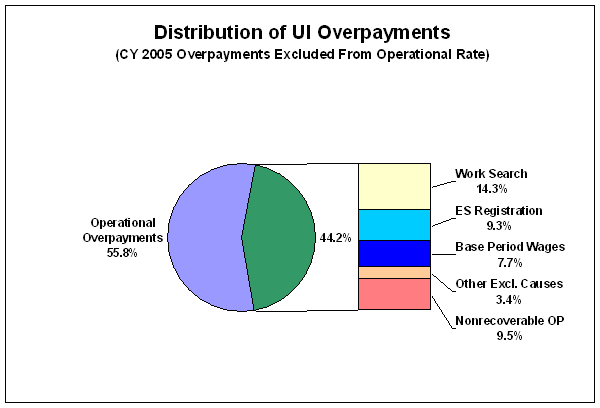
The operational rate represents that portion of total overpayments that state BPC operations should be able to detect and establish for recovery. The operational rate was defined following an extensive analysis of BAM overpayment data. The following charts show the cause components of the operational rate and the types of overpayments excluded from the operational rate.
Operational Overpayments
Overpayments included in the operational rate constitute over half of all UI benefits overpaid in CY 2005. More than half of the operational overpayments involve unreported or misreported benefit year earnings. Separation issues account for approximately one-fourth of the operational overpayments, followed by issues related to the claimant's ability to work and availability for work (A & A). The "Other Eligibility" category includes refusal of suitable work, self-employment, alien status, identity theft, and reporting issues (failure to appear as requested by the state agency to provide information related to the UI claim).

Overpayments Excluded from the Operational Rate
Several overpayment causes are excluded from the operational rate because either 1) state agencies are unlikely to detect these overpayments through the methods commonly employed by BPC (for example, crossmatches of UI claimant Social Security Numbers with wage record and New Hire Directory data, appeals reversals, and tips or leads); or 2) the cost of pursuing these overpayment errors exceeds the amount of benefits that can be recovered. Work search issues (14.3 percent of all overpayments), Employment Service registration issues (9.3 percent), and base period wage issues (7.7 percent) constitute the majority of the excluded causes.
After the exclusions by cause, the residual 10 percent of UI overpayments are excluded because they are unrecoverable, because either 1) the time that has elapsed between the overpayment and its detection exceeds the period established in state law in which an erroneous payment can be recovered (finality rule); or 2) responsibility for the improper payment error rests with the agency, employer, or third party, not the claimant. Most of these nonrecoverable overpayments are separation or continued eligibility issues, such as the requirement that the claimant is able and available for work.
BAM sampling and case investigations were suspended in Alabama, Louisiana, and Mississippi in the aftermath of Hurricane Katrina (August 29, 2005) and in Florida subsequent to Hurricane Wilma (October 24, 2005) for the following periods (dates are start and ending dates of batches suspended):
Alabama - Sept. 11, 2005 - Dec. 31, 2005 (Batches 200538-200553)
Florida - Oct. 23, 2005 - Dec. 24, 2005 (Batches 200544-200552)
Louisiana - August 21, 2005 - Dec. 31, 2005 (Batches 200535-200553)
Mississippi - August 21, 2005 - Jan. 28, 2006 (Batches 200535-200604).
Arkansas also suspended operations briefly for batches 200537 and 200538.
While it is not possible to measure payment accuracy directly for the period that BAM operations were suspended, payment accuracy can be estimated using completed CY 2005 case data in conjunction with historical BAM data and UI benefit payment data available from the ETA 5159 reports. These adjusted paid claims accuracy rates maintain continuity with the BAM data series and reflect the "core" UI claims workload -- that is, the estimated portion of the UI workload not related to the hurricanes. The accuracy of UI payments for hurricane-related claims during the periods in which BAM was suspended cannot be estimated due to the likelihood that these claims differ significantly from the historical data. Because of insufficient historical data, BAM denied claims accuracy (DCA) data cannot be adjusted.
The following tables summarize the adjusted amounts of UI benefits paid and the annual report and operational overpayment rates for the states affected by hurricanes in CY 2005 and the affect on the national totals.
| ST | Unadjusted Amount Paid | Adjusted Amount Paid | Difference |
|---|---|---|---|
| AL | $153,007,151 | $231,296,885 | $78,289,734 |
| AR | $247,004,864 | $256,691,329 | $9,686,465 |
| FL | $731,945,631 | $869,062,794 | $137,117,163 |
| LA | $149,564,235 | $235,443,725 | $85,879,490 |
| MS | $91,214,078 | $139,443,860 | $48,229,782 |
| US | $31,322,216,952 | $31,681,419,586 | $359,202,634 |
| ST | Unadjusted Annual Rpt. Rate | Adjusted Annual Rpt. Rate | Difference | Unadjusted Operational Rate | Adjusted Operational Rate | Difference |
|---|---|---|---|---|---|---|
| AL | 10.64% | 12.13% | 1.49 | 7.15% | 8.27% | 1.12 |
| AR | 14.41% | 14.41% | 0.00 | 12.35% | 12.35% | 0.00 |
| FL | 5.58% | 5.56% | -0.02 | 4.76% | 4.82% | 0.06 |
| LA | 19.17% | 18.89% | -0.28 | 10.91% | 10.67% | -0.24 |
| MS | 8.36% | 8.86% | 0.50 | 5.17% | 4.95% | -0.22 |
| US | 9.52% | 9.55% | 0.03 | 5.31% | 5.34 | 0.03 |
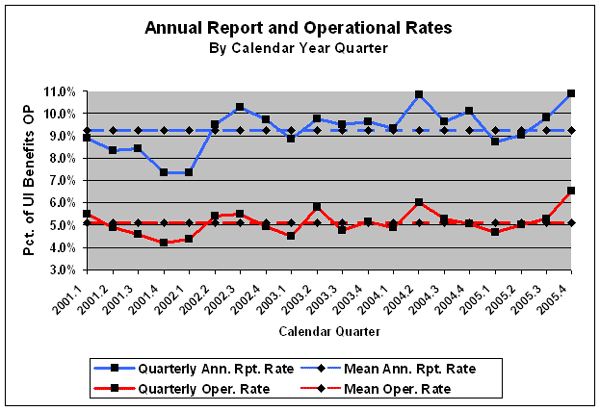
The following chart displays the annual report and operational overpayment rates by calendar quarter. For the period CY 2001 to CY 2005, the average annual report rate was 9.22 percent, and the average operational rate was 5.08 percent.
The distribution of the causes of UI overpayments varies considerably among the four integrity rates. Unreported or misreported benefit year earnings account for over 60 percent of UI fraud overpayments, over half (52 percent) of the overpayments defined by the operational rate, and nearly 30 percent of the overpayments included in the Annual Report rate, but only 5 percent of the amount overpaid for which the agency had full or partial responsibility.
Separation issues are the second leading cause of UI overpayments included in the Annual Report rate, accounting for 23 percent of the amount overpaid, and are also the second leading cause of overpayments included in both the operational rate (accounting for over one-quarter of the amount overpaid) and fraud overpayments (22 percent of the amount overpaid). Separation issues are the leading cause of overpayments for which the agency had full or partial responsibility, accounting for one-third of the amount overpaid.
By definition, work search and ES registration issues are excluded from the operational rate, and account for very small proportions of fraud overpayments. However, ES registration issues account for over one-quarter of the amount overpaid for which the agency had full or partial responsibility, and nearly 10 percent of the amount overpaid included in the Annual Report rate. Work search issues are a significant cause for the broadest measure of overpayments, the Annual Report rate (14 percent), but are not a significant cause of either fraud overpayments (2 percent) or overpayments for which the agency had full or partial responsibility (5 percent).
Able and available (A&A) issues account for 9 percent of the amount overpaid included in the operational rate, 5.5 percent of the amount overpaid included in the Annual Report rate, 5 percent of the fraud overpayments, and only 2 percent of the agency responsibility rate.

As with cause, the distribution of overpayment responsibility varies considerably by integrity rate. Claimants alone were responsible for 59 percent of the dollars overpaid included in the Annual Report rate. Errors resulting in overpayments that were attributed exclusively to the state agency accounted for 14 percent of the amount overpaid, and the claimant and agency were jointly responsible for an additional 10 percent of the dollars that were overpaid.
Claimants alone were responsible for 78 percent of the amount overpaid included in the operational rate. The claimant and agency were jointly responsible for 7 percent of the UI benefits overpaid under the operational rate definition, and the claimant and employer were jointly responsible for an additional 7 percent of the operational rate overpayments.
Claimants alone were responsible for 84 percent of the fraud overpayments, and claimants along with employers or agencies were responsible for nearly all of the remainder.
The agency rate is defined by responsible party. The agency was solely responsible for nearly half of the amount overpaid included in this rate. Agencies shared responsibility with claimants, employers, or third parties for the remainder.
 * Less than 1 percent of fraud overpayments were classified as "Other Responsibility".
For all payment errors, BAM identifies the action that the state workforce agency took before the payment was selected for the BAM sample. For overpayments included in the Annual Report rate, a little over two-thirds of the amount of UI benefits that were overpaid were not detectable through normal agency procedures. The agency had sufficient information but did not resolve the issue for 10 percent of the amount overpaid, did not follow procedures (8 percent of the amount overpaid), or identified the overpayment issue but took the incorrect action (8 percent). At the time BAM selected the sample, the agency had resolved or was in the process of resolving improper payments constituting 5 percent of the amount overpaid.
Nearly 80 percent of the amount overpaid for those improper payments that are included in the operational overpayment rate was not detectable through normal agency procedures at the time the payment was made. At the time BAM selected the sample, the agency had resolved or was in the process of resolving improper payments constituting just under 6 percent of the amount overpaid. The agency identified 2 percent of the amount overpaid through crossmatch with new hire or wage records independently of the BAM investigation. For the remainder of the operational overpayments, the agency had sufficient information to identify the overpayment issue but did not resolve the issue, identified the overpayment issue but took the incorrect action, or did not follow the prescribed procedures.
Eighty-seven percent of the amount overpaid due to fraud was not detectable through normal agency procedures at the time the payment was made. The remaining fraud overpayments were distributed nearly equally among the other prior agency action categories.
For overpayments for which the agency had full or partial responsibility, the agency had sufficient information to identify the overpayment issue but did not resolve the issue for 34 percent of the amount overpaid. The agency did not follow procedures for 29 percent of the amount overpaid and took the incorrect action for 28 percent of the amount overpaid. The remaining overpayments for which the agency had full or partial responsibility were either not detectable through normal procedures at the time the payment was made or the agency had resolved or was in the process of resolving improper payments.

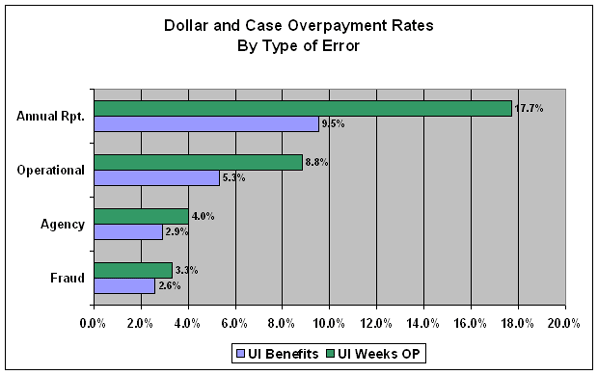
UI payment integrity rates can be expressed either in terms of the number of UI payments or the amount paid. Analyses in the previous sections have focused on dollar error rates -- the percentage of UI benefits that were overpaid. The following chart compares the dollar and case overpayment rates for the four integrity rate definitions. While 9.5 percent of UI benefits were overpaid using the Annual Report definition, 17.7 percent of the 118.8 million UI payments included in the BAM survey population had overpayment errors. Nearly 9 percent of UI payments were overpaid according to the operational rate definition, compared with 5.3 percent of the UI benefits paid.
The difference in these rates is explained by the fact that many overpayments are partial overpayments -- that is, the claimant's benefit is reduced, but not completely eliminated for the week claimed. This can occur, for example, if the claimant had some earnings during the week for which he or she received benefits, but these earnings were not large enough to completely disqualify the claimant for that week.
Smaller differences between the case and dollar overpayment rates indicate that fewer partial overpayments are included in the rate. For example, the fraud case error rate is 3.3 percent compared with the fraud dollar rate of 2.6 percent. Most fraud overpayments result in establishment of overpayments equal to the entire amount of the payment.
Additional analyses of the Annual Report overpayment rate are provided in Attachment 1, including overpayment causes, responsibility, state agency action, and rate changes.
BAM estimates that $206 million were underpaid in CY 2005, compared with $230 million in CY 2004. As a percentage of UI benefits paid, the CY 2005 national underpayment rate of 0.66 percent is essentially unchanged from CY 2004. State underpayments ranged from 0.09 percent in New Mexico to 1.79 percent in Louisiana.
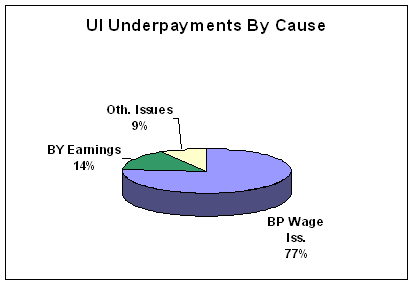
Errors in reporting or recording base period wages accounted for over 75 percent of the amount underpaid and represented 0.5 percent of the amount of UI benefits paid in CY 2005. Errors in reporting or recording benefit year earnings were the second leading cause -- 14 percent of all underpayments and 0.09 percent of UI benefits paid.
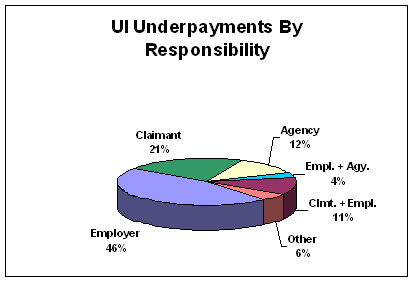
Employers alone were responsible for almost half of the amount underpaid, which represented 0.30 percent of the amount of UI benefits paid. Claimants alone were responsible for an additional 21 percent of the amount underpaid, which represented 0.14 percent of the amount of UI benefits paid.
The underpayments estimated from BAM paid claims samples represent underpayments only for those claimants eligible for unemployment compensation (UC). Underpayments also result when claims for UC are erroneously denied. Each week, BAM units in the State Workforce Agencies select samples of denied UC claims from three populations, defined by the type of issue on which the denial was based -- monetary, separation, and nonseparation (continued eligibility).
BAM estimates that 14.8 percent of the 1.1 million monetary denials in CY 2005 were improper, compared with an improper denial rate of 14.2 percent in CY 2004. The difference of 0.6 percentage points is less than the expected differences in rates due to sampling and therefore is not statistically significant. These UI claims were denied because the agency had initially determined that the claimant had not earned sufficient wages in employment prior to being unemployed or failed to meet other requirements for monetary eligibility, such as sufficient earnings in a minimum number of weeks. The BAM DCA audit identified additional wage credits for these claimants that had not been included in the original monetary determination or identified other errors in the original determination.
For many of these improper denials, the state agency had identified the additional wages and issued a redetermination establishing eligibility independent of the BAM investigation, or the initial denial was reversed on appeal. When the rate is adjusted for these redeterminations and appeals reversals, the improper denial rate for monetary determinations drops to 10.1 percent, compared with an adjusted improper denial rate of 9.2 percent in CY 2004. The difference of 0.9 percentage points is not statistically significant.
BAM estimated that 8.1 percent of the 2.0 million separation denials issued in CY 2005 were improper, compared with 8.3 percent estimated for CY 2004. When redeterminations and appeals reversals are taken into account, the improper denial rate for separations decreases to 6.1 percent, compared with 6.0 percent in CY 2004. Neither difference is statistically significant.
The estimated improper denial rate of 12.4 percent for the 1.9 million nonseparation determinations in CY 2005 and the adjusted improper denials rate of 10.0 percent are statistically unchanged from CY 2004.
BAM determined that small percentages of the separation (0.2 percent) and nonseparation (1.9 percent) denials resulted in overpayments. Overpayments can occur if the period of disqualification for UI benefits was less than it should have been, and the claimant received compensation during the period that he or she should have been ineligible for benefits. Overpayments can also occur if the claimant received a partial payment that was too large. A partial payment is a reduction in the claimant’s weekly benefit amount and is issued when the claimant has earnings or other income for weeks that he or she claims UI benefits. For some of these compensated weeks, the BAM audit identified additional income that reduced benefits further or in some cases eliminated eligibility for benefits entirely.
For small percentages of all three types of denials, BAM concluded that the claimant was properly denied but the agency committed a procedural error, such as basing the determination on the wrong reason or section of the law or applying incorrect dates to the period of denial. For example, a claimant may have been denied because of a monetary determination that the claimant had earned insufficient wages in the minimum number of weeks required by state law. The BAM audit determined that the claimant did meet the minimum weeks test, but was still ineligible due to insufficient total wage credits earned in the base period. For separation and nonseparation determinations, these errors typically involve citing the wrong issue in the determination (for example, availability versus reporting).
| Denial Type | Population | Sample | Improper Rate* |
Adjusted Improper Rate# |
Over Payment |
Proper Denial+ |
|---|---|---|---|---|---|---|
| Monetary | 1,144,810 | 7,516 | 14.83% | 10.11% | 0.00% | 0.59% |
| Separation | 2,010,297 | 7,797 | 8.09% | 6.07% | 0.21% | 3.48% |
| Nonseparation | 1,868,311 | 7,800 | 12.41% | 10.03% | 1.90% | 3.06% |
Notes:
In several states the population from which the BAM DCA samples were selected may not include all of the determinations that meet the definition for inclusion in the DCA population. This limits the degree to which inferences about the population can be made from BAM DCA data. States are in the process of resolving these population issues.
* Improper rate is the percentage of denied claims that BAM DCA concluded were erroneous, whether or not official agency action was taken to issue payment or increase claimant's WBA, MBA or remaining balance.
# Adjusted improper rate excludes erroneous denials that were corrected by the agency and claims for which eligibility was established on appeal prior to DCA case completion.
+ Properly denied, but BAM identified a procedural error, such as basing the determination on the wrong reason or section of the law or applying an incorrect period of denial.
Agency Action for Improper Denials
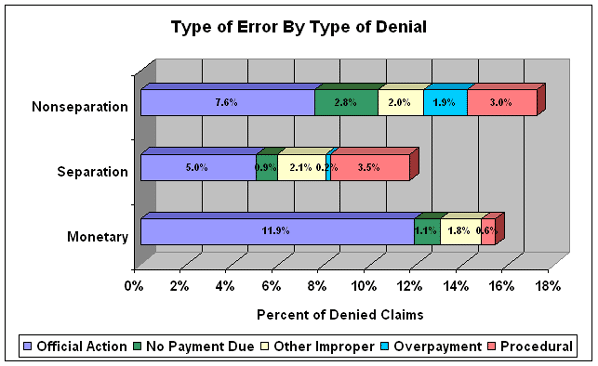
Not every improper denial results in the agency issuing a payment to the claimant or increasing the claimant's weekly benefit amount, maximum benefit amount, or dependents’ allowance. Agencies took action to insure that benefits were paid for just over 75 percent of the improper monetary denials. However, fewer than half of the claimants improperly denied for separation or nonseparation issues received benefits. In some cases claimants are ineligible for payment due to other disqualifying issues. In other cases the agency is precluded from taking action because of the time that has elapsed since the denial was issued (finality rules) or by other provisions of the law. The following chart summarizes the type of error by type of denial:
- Official Action - Agency took action to issue payment;
- No Payment Due - Claimant was not entitled to payment due to other disqualifying issue or because claimant did not file a claim for the week(s) improperly denied;
- Other Improper - No official action could be taken due to finality or other provisions of state law;
- Overpayment - Claimant received payment for weeks of unemployment to which he / she was not entitled;
- Procedural Error - Claimant properly denied, but BAM identified a procedural error on the part of the agency.
Responsibility for Improper Denials
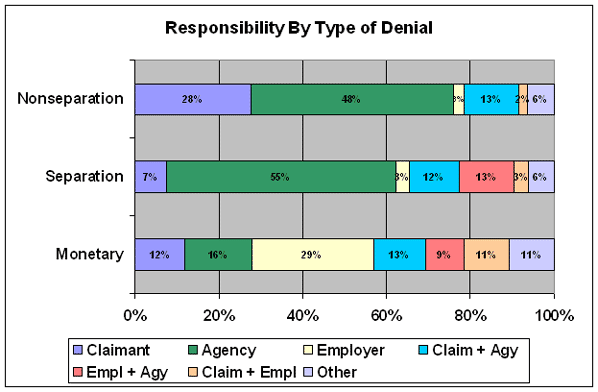
The party responsible for erroneous denials varies by type of denial determination. Employers were solely responsible for almost 30 percent of the erroneous monetary denials due to misreporting or underreporting employees' wages. Agency error accounted for 16 percent of the improper monetary denials, and claimants were responsible for another 12 percent of the erroneous monetary denials.
The state agencies were solely responsible for the 55 percent of the incorrect separation denials and 48 percent of the improper nonseparation denials. Employers and the state agencies were jointly responsible for 13 percent of the erroneous separation denials. Claimants were responsible for over a quarter of the erroneous nonseparation denials.
Prior Agency Action for Improper Denials
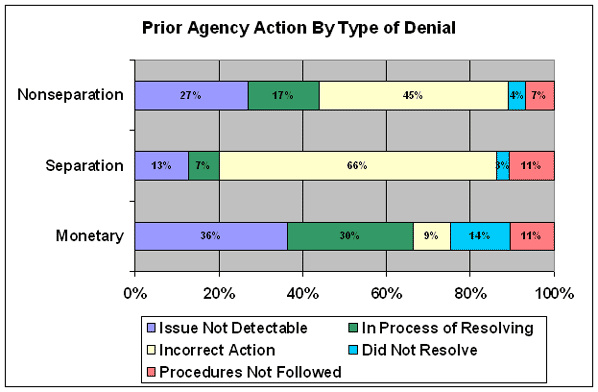
Because the state agencies, either solely or jointly with other parties, are responsible for the majority of the erroneous nonmonetary denials and for a significant proportion of the monetary denials, it is instructive to examine agency action prior to the DCA investigation. Agencies had resolved or were in the process of resolving 30 percent of the erroneous monetary denials. However, 36 percent of the improper monetary denials could not be detected through the normal claims taking procedures. Typically, these are claims for which the employer incorrectly reported the wages or the claimant failed to inform the agency that he or she had out-of-state wage credits. Therefore, the agency issued the monetary denial based on the best information available at the time of the initial determination.
For improper nonmonetary denials, the agency identified the issue but took the incorrect action for two-thirds of the improper separation determinations and 45 percent of the erroneous nonsepartion determinations.
Although the agency followed its procedures, the issue or information was undetectable for 13 percent of the improper separation determinations and 27 percent of the erroneous nonsepartion determinations. For these claims the agency issued its determination to deny eligibility based on information that, although incomplete, was the best available under normal procedures at the time of its decision.
Separation Issues
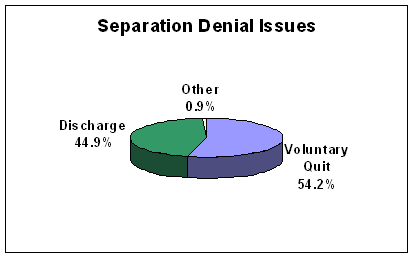
A majority of the separation denials concerned voluntary quits (VQ), while discharges accounted for most of the balance. "Other" includes a small number of labor disputes, military separations, or claimants who were still job attached (partial unemployment).
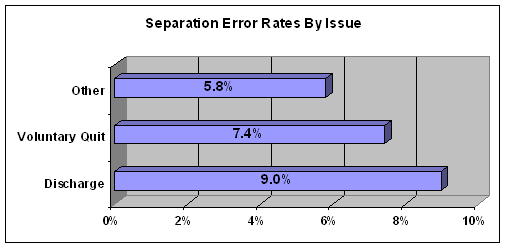
Claims that were denied for discharge issues were somewhat more likely to be in error than denials issued for VQs. Nine percent of discharge denials were improper, compared with 7.4 percent of the VQ denials. Nearly 6 percent of the separation denials that were based on "Other" issues were incorrect.
Nonseparation Issues
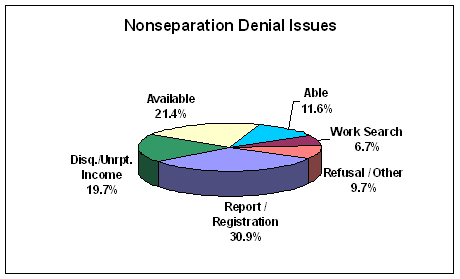
The claimant's failure to report as required by the state agency to provide information related to the UI claim or to receive reemployment services constituted the largest category of nonseparation denials in CY 2005. The remaining nonseparation denials are distributed among several issues, with able and available issues and disqualifying or unreported income issues collectively comprising the majority.
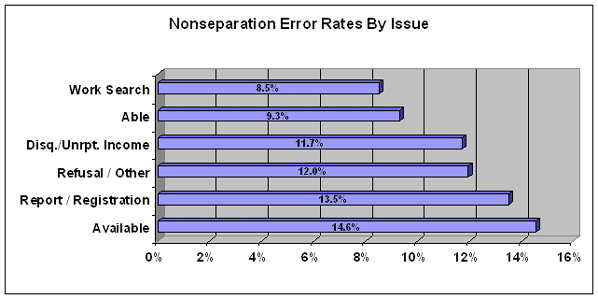
Determinations that denied eligibility because the claimant failed to meet the state's work search requirements had the lowest error rate (8.5 percent), although work search issues constitute less than 7 percent on the nonseparation denials. Denials based on the claimant's availability for work had the highest error rate (14.6 percent).
Denials and UI Workload Measures
The following sections analyze denials relative to the number of eligibility determinations that agencies make processing UI claims.
Monetary Denials
State workforce agencies determine the monetary eligibility of claimants when they file a new initial claim or a transitional claim.* In CY 2005, state agencies determined that 88 percent of the 11.6 million new initial and transitional claims were monetarily eligible. An additional 10.2 percent of these claims were properly denied. Only 1.8 percent of these claims were improperly denied, and agencies had corrected or were in the process of correcting approximately one-third of these improperly denied claims.
 *A transitional claim is a claim filed to request a determination of eligibility and
establishment of a new benefit
year having an effective date within the seven-day period immediately following the benefit year ending date and a week
for which compensation or waiting week credit was claimed.
*A transitional claim is a claim filed to request a determination of eligibility and
establishment of a new benefit
year having an effective date within the seven-day period immediately following the benefit year ending date and a week
for which compensation or waiting week credit was claimed.
Separation Denials
In order to be eligible for unemployment compensation, a claimant must be involuntarily unemployed due to lack of work, discharged for non-disqualifying reasons, or must have voluntarily left employment for a non-disqualifying reason provided in state law, such as workplace harassment, domestic violence, or to relocate with a spouse. Agencies conduct determinations of eligibility when a separation issue has been identified. For example, the UI claimant's separating employer may assert that the claimant voluntarily quit or was discharged for good cause. The agency then gathers information from the claimant, employer, and relevant third parties and issues a determination of eligibility. Separation issues normally are identified when a new initial claim or an additional claim+ is filed.
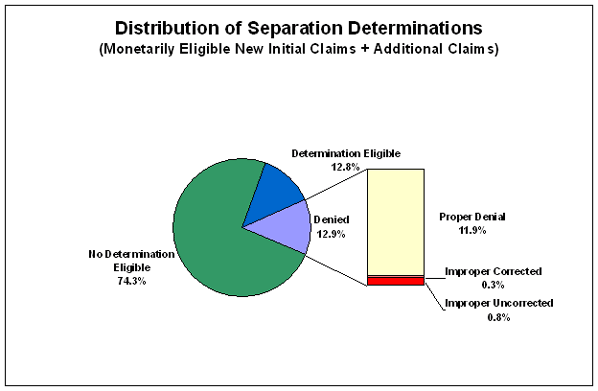
In CY 2005, there were approximately 9.7 million monetarily eligible new initial claims and approximately 6.1 million additional claims. No separation determination was conducted for nearly three-fourths of these claims, because the reason for separation was lack of work. State agencies conducted determinations and concluded that 12.8 percent of these monetarily eligible new initial claims and additional claims were filed by claimants who were separated for non-disqualifying reasons and were therefore eligible to file claims for individual weeks of unemployment. An additional 12 percent of these claims were properly denied. A little over one percent of all monetarily eligible new initial claims and additional claims were improperly denied, and agencies had corrected or were in the process of correcting 25 percent of these.
+ Additional claims are filed when a claimant returns to work during the benefit year before exhausting the maximum amount of UI benefits to which he or she is entitled, is separated from that employment, and files a claim for additional weeks of unemployment. The agency determines eligibility based on the circumstances of the claimant's separation from the intervening employment.
Nonseparation Denials
Nonseparation issues include the claimant's ability to work and availability for work, disqualifying and unreported earnings and income during the benefit year, failure to meet work search requirements, and failure to report as required by the state agency to provide information related to the UI claim or to receive reemployment services. Although nonseparation issues can be detected at various points in the UI claims taking process, these issues generally affect the claimant's eligibility for continued claims of UI.
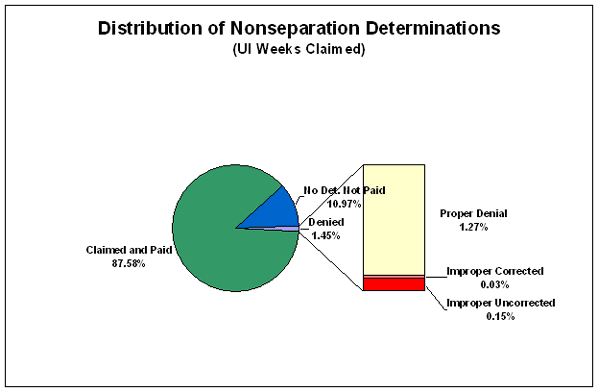
In CY 2005 state agencies conducted 2.9 million nonseparation determinations, which represent only 2 percent of the 141.3 million UI weeks claimed. Over 87 percent of UI weeks claimed were paid in CY 2005. Approximately 11 percent of UI weeks claimed were not paid, and no nonseparation determination conducted. These include weeks for which the claimant did not contest the conclusion of the UI claims taker that the week should not be paid. Of the remaining 1.45 percent of UI weeks claimed, nearly 90 percent (1.3 percent of UI weeks claimed) were properly denied. The number of improper nonseparation denials that were not corrected by agency action represented only 0.15 percent of all UI weeks claimed.
Links to Additional BAM Paid and Denied Claims Data and BAM Methodology
BAM Payment Integrity Measures -- UI Benefits Paid Rates By State for CY 2005
BAM Payment Integrity Measures -- UI Weeks Paid Rates By State for CY 2005
Prepared by:
U. S. Department of Labor
Employment and Training Administration
Office of Workforce Security
Division of Performance Management
July 2006